In semiconductor fabrication, the components that carry wafers through high-temperature processes are critical to maintaining process stability and yield. A quartz boat, also known as a fused silica wafer carrier, holds silicon wafers vertically inside diffusion furnaces, CVD systems, and annealing equipment at temperatures up to 1200°C.
The material purity, slot design, and dimensional accuracy of a quartz boat directly affect contamination control, wafer spacing, thermal uniformity, and process reliability. Choosing the right quartz boat requires understanding the required purity grade, specifications, application conditions, and supplier capabilities.
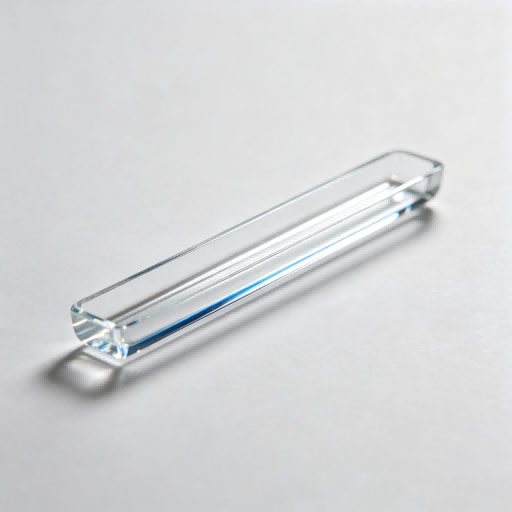
What Is a Quartz Boat and How Does It Work in Semiconductor Furnaces?
A quartz boat is a precision-machined wafer carrier with multiple slots along its length. Silicon wafers are placed vertically in these slots, allowing consistent spacing for uniform gas flow and heat distribution during high-temperature processing.
Quartz boats are commonly used inside horizontal or vertical quartz tube furnaces for diffusion, oxidation, CVD, and annealing processes.
Fused silica is selected because it provides high purity, excellent thermal shock resistance, and chemical stability compared with metal or ceramic alternatives.
| Function | How Quartz Boat Supports Semiconductor Processing |
|---|---|
| Wafer support | Precision slots maintain wafer position and spacing |
| Contamination control | High-purity SiO₂ reduces metallic contamination risks |
| Thermal uniformity | Consistent wafer spacing improves heat distribution |
| Gas flow management | Open slot design allows process gases to reach wafer surfaces |
| Thermal stability | Low thermal expansion supports repeated heating cycles |
How Does Quartz Boat Purity Affect Semiconductor Applications?
Material purity is one of the most important factors when selecting a semiconductor quartz boat. High-purity fused silica helps prevent contamination that may affect wafer performance and device reliability.
Different processes require different purity levels:
| Quartz Grade | SiO₂ Purity | Typical Application |
|---|---|---|
| Semiconductor Grade | ≥99.998% | Diffusion, oxidation, high-sensitivity processes |
| High Purity Quartz | ≥99.99% | General semiconductor processing |
| Standard Quartz | ≥99.9% | Less contamination-sensitive applications |
For critical semiconductor processes, manufacturers should provide material certification and traceability records to verify quartz purity and consistency.
What Quartz Boat Specifications Should Be Considered?
The dimensional accuracy of a quartz boat directly affects wafer processing uniformity. Important specifications include wafer size, slot pitch, slot width, overall dimensions, and surface finish.
| Specification | Why It Matters |
|---|---|
| Wafer size | Determines boat design and capacity |
| Slot pitch | Controls wafer spacing and process uniformity |
| Slot width | Ensures proper wafer positioning |
| Overall length | Must match furnace tube requirements |
| Surface finish | Helps reduce particle generation |
Fire-polished slot edges are commonly preferred for semiconductor applications because smoother surfaces reduce particle generation and improve long-term reliability during repeated thermal cycling.
Where Are Quartz Boats Used in Semiconductor Manufacturing?
Quartz boats are widely used in several high-temperature semiconductor processes.
Diffusion and Oxidation
In diffusion and oxidation furnaces, quartz boats carry wafers through temperatures typically ranging from 900–1200°C. The boat must maintain structural stability and dimensional accuracy during repeated thermal cycles to ensure consistent wafer processing.
Chemical Vapor Deposition (CVD)
CVD processes require precise wafer spacing to maintain uniform gas distribution and film deposition. Quartz boat geometry directly affects coating consistency across the wafer batch.
Annealing Processes
During annealing and post-implantation processes, quartz boats support controlled heating and cooling cycles while maintaining wafer positioning and process stability.
Quartz Boat vs Silicon Carbide Boat and Metal Carrier
Different wafer carrier materials serve different requirements. Fused quartz remains the preferred choice for most semiconductor furnace applications because it provides a strong balance between purity, thermal performance, and cost.
| Property | Fused Quartz Boat | Silicon Carbide Boat | Metal Carrier |
|---|---|---|---|
| Temperature capability | Up to ~1200°C | >1400°C | Lower |
| Contamination risk | Very low | Low | Higher |
| Thermal shock resistance | Excellent | Good | Poor |
| Dimensional precision | High | Moderate | High |
| Transparency | Yes | No | No |
| Typical use | Diffusion, oxidation, CVD | Higher temperature processes | Non-critical handling |
For most semiconductor processes operating below approximately 1200°C, fused quartz boats provide the required performance and reliability.
How to Choose a Reliable Quartz Boat Manufacturer?
Selecting a qualified quartz boat manufacturer is important for ensuring product consistency and process reliability.
Key factors include:
| Evaluation Factor | Importance |
|---|---|
| Material certification | Confirms quartz purity and traceability |
| Dimensional inspection | Ensures slot accuracy and stable performance |
| Surface quality control | Reduces contamination risks |
| Custom fabrication capability | Supports special wafer sizes and designs |
When ordering a quartz boat, engineers should provide key information such as wafer size, slot requirements, furnace dimensions, operating temperature, and purity requirements.
A reliable manufacturer should be able to provide dimensional inspection reports and suitable material documentation for semiconductor applications.
Quartz boats are precision semiconductor components where material purity, dimensional accuracy, and manufacturing quality directly influence process stability and wafer yield.
For custom quartz boat requirements, including special wafer sizes, slot designs, or high-purity semiconductor applications, our engineering team can help evaluate the suitable design and fabrication solution.
Contact us to discuss your quartz boat requirements and find the right solution for your semiconductor process.