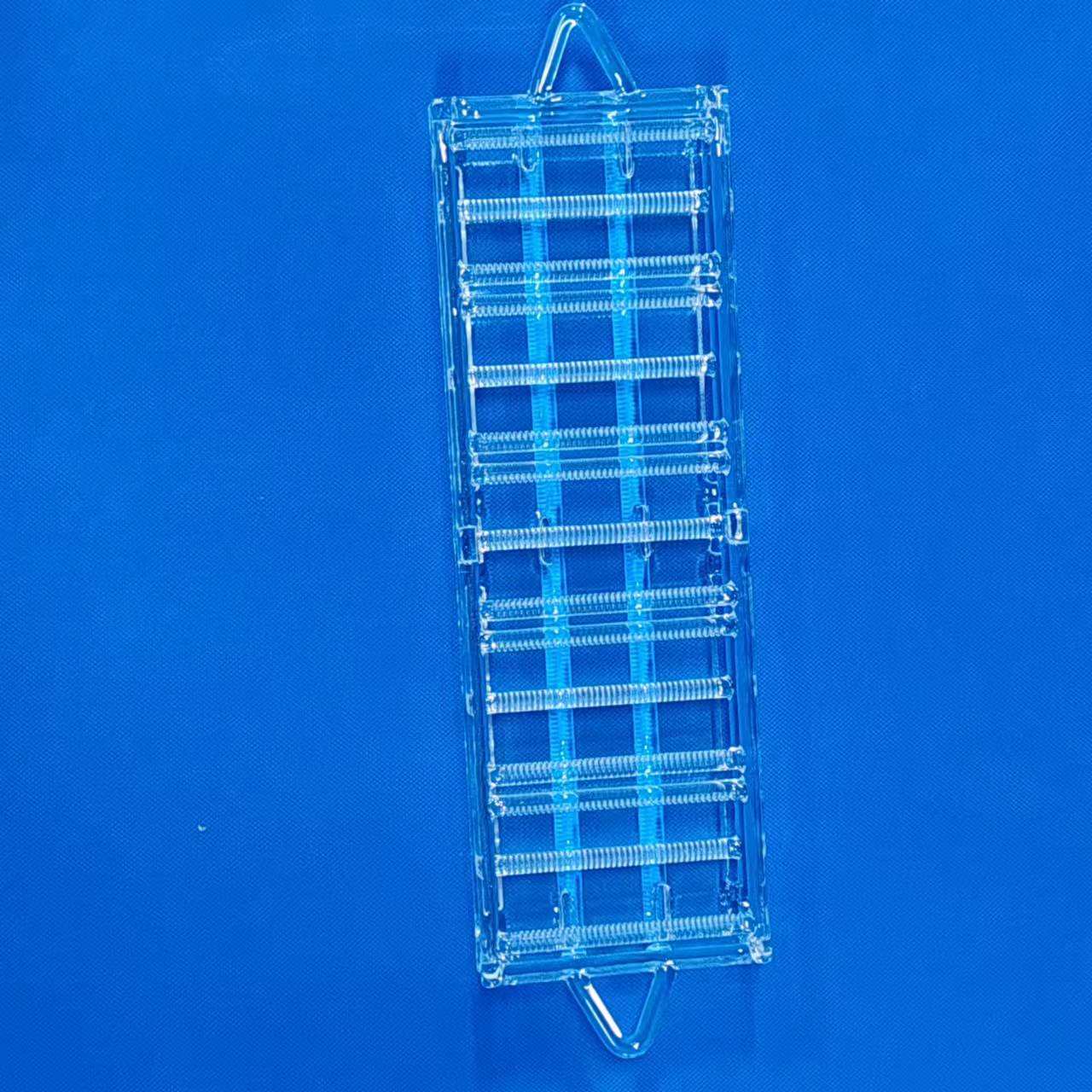
A quartz boat is the part that carries wafers through the furnace. It sits in the hot zone, holds every wafer at a fixed pitch, and is handled between steps — which is why the material grade and the slot geometry both have to be right. Process temperatures reach 1200 °C, and the boat has to hold its dimensions across hundreds of cycles at that level.
Where the boat sits in the process
Horizontal and vertical furnaces both use boats to move wafers into and out of the heated zone. The boat goes in loaded, stays through the thermal cycle, and comes out again. In oxidation, diffusion and CVD steps the wafers must stay free of metallic contamination, which is the reason quartz replaced metal carriers in the first place. Fused silica is the usual choice for three properties at once: a coefficient of thermal expansion of approximately 0.55 × 10⁻⁶ /°C, chemical inertness against the process gases, and SiO₂ purity from 99.9% up to 99.998% depending on the process tier.
What the process asks of the boat
| Function | How the boat delivers it |
|---|---|
| Wafer support | Precision-machined slots hold wafers at a defined pitch through the whole thermal cycle |
| Contamination isolation | High-purity SiO₂ body introduces no metallic impurities to the process atmosphere |
| Thermal uniformity | Even wafer spacing gives consistent gas flow and heat exposure across the batch |
| Gas flow management | Open slot geometry lets process gas reach every wafer surface |
| Thermal shock resistance | Near-zero expansion survives repeated cycling from ambient to 1200 °C |
Material purity and process compatibility
Semiconductor-grade fused silica for boats is specified at ≥99.998% SiO₂ with total trace metal impurities below 20 ppm. The contaminants that matter are alkali metals (sodium, potassium), transition metals (iron, copper, nickel) and aluminium — all of them diffuse into silicon at process temperature and shift the electrical behaviour of the finished device. A boat that passes dimensional inspection but fails purity certification is not usable in front-end-of-line work.
| Application tier | Process examples | Minimum SiO₂ purity | Trace metal limit |
|---|---|---|---|
| Front-end-of-line (FEOL) | Gate oxidation, shallow junction diffusion | ≥99.998% (semiconductor grade) | <20 ppm total, <5 ppm alkali metals |
| Standard front-end | Epitaxial support, well doping | ≥99.99% (high purity clear) | <50 ppm total |
| Back-end-of-line (BEOL) | Passivation anneal, contact formation | ≥99.9% (standard clear) | <100 ppm total |
Lot-level certification is the right standard for any FEOL application, not a grade label: SiO₂ content and individual trace elements measured by ICP-MS or an equivalent method, with detection limits that match the process specification. A supplier who offers only a grade name without lot traceability is not an appropriate source for critical process components.
Dimensional tolerances and slot design
Slot pitch, slot width and straightness decide how uniformly the batch processes. A drift in pitch changes wafer-to-wafer spacing and breaks the gas flow the recipe was qualified around; bow or twist gives the wafers at the ends of the batch different thermal exposure from those in the middle.
| Parameter | Typical specification (150–300 mm wafer boats) |
|---|---|
| Slot pitch | 4.76 mm (187 mil) — standard for most diffusion processes |
| Slot width | 2.0–2.5 mm |
| Overall length tolerance | ±0.5 mm |
| Bow / straightness | <0.3 mm over the full boat length |
| Slot edge finish | Fire-polished, not ground |
Fire-polished edges are specified rather than ground edges for a reason: ground surfaces keep micro-cracks that shed particles during thermal cycling, and particles inside a process tube are a direct yield risk. Polishing also removes the sub-surface damage where devitrification — the gradual crystallisation of the surface — starts. Boats for 300 mm wafers need tighter straightness than 150 or 200 mm boats, because the longer body amplifies any deviation, so confirm straightness across the full loaded length and not only on the empty boat.
Where boats are used across process steps
Diffusion and oxidation furnaces
Dopant drive-in (boron, phosphorus, arsenic) and thermal oxide growth, at 900–1200 °C in reactive oxidising or reducing atmospheres, repeated over hundreds of cycles. This is the most demanding service environment for a fused silica boat, and any warping under thermal load changes the wafer spacing the recipe was qualified around.
Chemical vapour deposition
LPCVD puts wafers inside the reaction chamber for polysilicon, silicon nitride or silicon dioxide films. Film thickness across a batch follows the consistency of gas flow between wafers, so variation in slot pitch turns directly into thickness non-uniformity. Deposition also builds up on the boat body itself, which eventually means cleaning or replacement.
Annealing and post-implantation
Dopant activation and repair of lattice damage. Thermal mass matters here: thinner, lighter boat sections ramp and cool faster, which tightens control of the anneal temperature profile.
Quartz versus silicon carbide and metal carriers
| Property | Fused quartz boat | Silicon carbide boat | Metal carrier |
|---|---|---|---|
| Max operating temperature | ~1200 °C | >1400 °C | <800 °C (material dependent) |
| Metallic contamination risk | Very low | Low | High |
| Thermal shock resistance | Excellent | Good | Poor |
| Dimensional precision | High | Moderate | High |
| Optical transparency | Yes | No | No |
| Relative cost | Moderate | High | Low–moderate |
| Typical application | Diffusion, oxidation, CVD, anneal | Processes above 1200 °C | Non-critical carrier applications |
Silicon carbide is the right call once the process passes the practical devitrification threshold for fused quartz, typically above 1150–1200 °C in continuous operation, where quartz service life becomes too short to justify keeping it. Across the 800–1150 °C band where most furnace work sits, fused quartz remains the standard. Metal carriers belong in handling and transport outside the process tube, not inside the hot zone.
What to tell a manufacturer when specifying a boat
- Wafer diameter (100, 150, 200 or 300 mm) and wafers per load
- Slot pitch — 4.76 mm (187 mil) is standard for most diffusion processes; CVD or specialty work may differ
- Furnace tube inner diameter, which sets the boat's outer width and the clearance inside the tube
- Process temperature profile — peak temperature, ramp rate and cycles per week
- Furnace orientation, horizontal or vertical — the two geometries and loading mechanisms are not interchangeable
- Purity certification requirement — minimum SiO₂ grade and the trace element documentation needed (ICP-MS lot certificate or grade label)
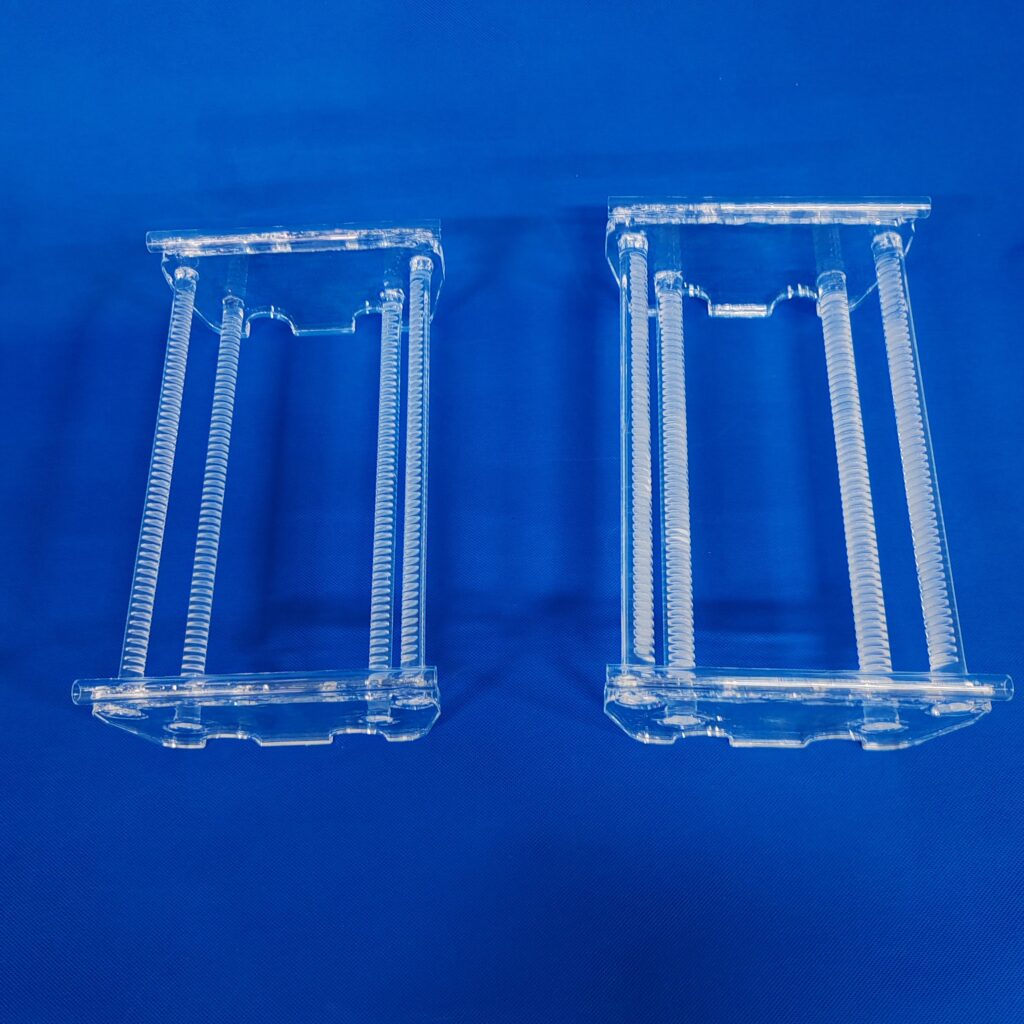
- Design preference — one-piece machined boat (tighter geometry, not repairable) or assembled rod-and-rail design (slot rods replaceable, suited to longer maintenance strategies)
Each boat ships with a dimensional inspection report covering slot pitch, overall length and bow measurement, and a lot-level purity certificate where the process requires one.
For non-standard wafer sizes, specialty slot geometries or FEOL purity requirements, send the specification to sales@purequartzproducts.com or use the quote form.
Boat selection, replacement fit and failure diagnosis
A replacement must fit the loading mechanism as well as the furnace tube. Check the handlers, paddles, transfer arms and mounting points; overall width alone does not establish compatibility. Send the equipment model, photographs and the old part's groove count and groove profile. A boat that is one groove out, or whose grooves are too shallow, will not load reliably.
Specify slot count, groove depth and tool clearances alongside the pitch and width in the tables above. Record whether the previous part cracked, sagged, devitrified or introduced contamination. Those are different failure mechanisms: extra wall thickness does not correct a mounting constraint or a contamination source. Ask for the dimensional inspection and material documentation needed for the process rather than choosing solely on the purchase price.
Quartz tanks, sample boats and wet-process vessels
Overview of quartz tanks and boats
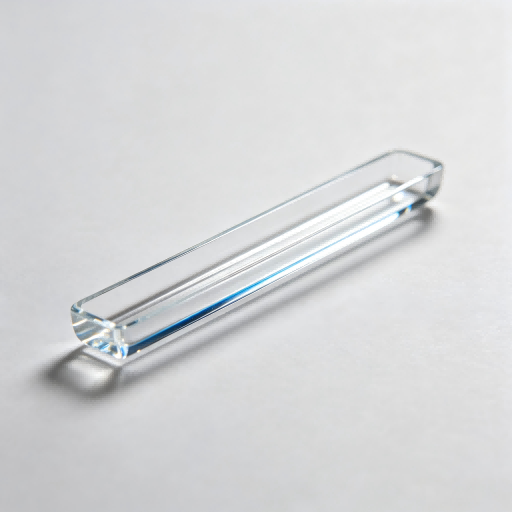
Quartz boats hold wafers, substrates or samples in position during processing. Quartz tanks are vessels for wet processing or laboratory operations. The drawing and the operating conditions determine the material grade and the geometry.
Ordering details for boats and tanks
- Wafer or sample boat — wafer diameter or sample size, slot count, pitch, groove profile, loading orientation, overall dimensions and tool clearances.
- Process tank — internal and external dimensions, fill level, mounting points, and any drain or overflow connections.
- Service conditions — temperature cycle, media and concentration, cleanliness requirements and order quantity.
For a replacement part, send the equipment model and a drawing or photos of the mounting interfaces.
Quartz boat
A quartz boat is a small vessel built from high-purity fused quartz, typically 99.99% purity or higher, chosen for thermal stability, chemical inertness and resistance to thermal shock. The name comes from function: the boat carries wafers or samples through a process, the way a boat carries cargo. Specify the actual furnace cycle, atmosphere and load — the operating limit depends on grade and geometry, not on a single number.
Types of quartz boats
- Standard boat — rectangular with parallel sides, used in thermal oxidation, diffusion and CVD.
- Tapered boat — one end wider, narrowing along the length; helps control airflow in epitaxial growth and CVD.
- Hinged boat — fitted with a hinged cover, used where the load must be protected from contamination or where gas exposure has to be controlled, such as annealing, diffusion and oxidation.
- Custom boat — shape, size and function built for solar cell production, LED manufacturing or research laboratories.
Application areas
- Semiconductor manufacturing — high-temperature steps such as thermal annealing and oxidation, where wafers must stay free of impurities.
- Solar cell and LED production — high-purity processing at temperature.
- Laboratory experiments — combustion and other high-temperature work where sample purity and a controlled environment matter.
Quartz tank
A quartz tank is a container made from high-purity fused quartz. State any required purity grade or impurity limits so the material can be evaluated for the process. Tanks usually include a drain port on the side or bottom for emptying or recirculation, and can be built to complex geometries and large sizes.
Application areas
- Chemical processing — containing and processing reagents; inertness prevents reaction with the bath.
- High-temperature processes — cleaning and etching steps that need a heat-resistant container without contaminating the media.
- Scientific research — material science and physical chemistry work that demands very high purity in the vessel.
Send your drawing to sales@purequartzproducts.com or use the quote form with the dimensions and process conditions.
Related components and selection guides
Frequently asked questions
Where are quartz boats used in a fab?
Horizontal and vertical furnaces use boats to move wafers into and out of the hot zone for oxidation, diffusion and CVD steps. The boat stays through the thermal cycle and must keep wafers free of contamination the whole time.
What usually ends a boat's service life?
Devitrification, sagging and cracking are the common ones. Each has a different cause — surface change, support and thermal mass, or handling and thermal gradient — so the fix differs.
Does a thicker boat always last longer?
No. Support along the length and thermal mass matter more for sag and distortion, and a heavier boat also heats more slowly and adds load to the moving assembly.
What slot pitch should a wafer boat use?
4.76 mm (187 mil) for most diffusion processes, with 2.0–2.5 mm slot width. CVD and specialty applications may differ, and 300 mm boats also need tighter straightness across the full loaded length.
What decides whether a quartz boat works in my furnace?
Wafer diameter, slot count, pitch, groove profile, overall dimensions and tool clearances decide whether the boat loads. Furnace type, atmosphere and temperature cycle decide the grade and how long it lasts.
Why did my last boat fail early?
Cracking, sagging, devitrification and contamination each point to a different cause. Describe the failure mode on the enquiry and the recommendation changes accordingly.
Can you match an existing boat?
Yes. Send the equipment model and photographs of the mounting points, plus the measurements of the old part including groove pitch and count.
Which quartz boat type do I need?
Four boat shapes cover most work: standard rectangular, tapered for airflow control, hinged for contamination protection, and fully custom for solar, LED or research use. The drawing decides the rest.
What do you need to quote a wafer boat?
Wafer diameter or sample size, slot count, pitch, groove profile, loading orientation, overall dimensions and tool clearances — plus the furnace cycle and atmosphere. For a replacement, the equipment model and photos of the mounting save a round of questions.
What is needed for a process tank quote?
Internal and external dimensions, fill level, mounting points, drain or overflow connections, the media and its concentration, and the temperature cycle. Purity grade or impurity limits should be stated as well.
Need this part made?
Send your drawing and operating conditions for a buildability check and a price.